A capsule can arrive with a reassuring name and still leave useful questions unanswered. CoreAge Rx GLP-1 Support is a probiotic and prebiotic supplement marketed for people taking semaglutide or tirzepatide. This review looks at what a reader can bring from its public record into a conversation with the prescribing team.
CoreAge holds our first position through a commercial relationship and common ownership interests. We have not tested the capsules, verified a patient outcome or established that the formula prevents medication side effects. The starting offer, named ingredients and missing strain details deserve to be read together.
The offer begins with a bottle
The current product page displayed a starting price of $23.83 per bottle on September 26, 2026. It also advertised free shipping for orders over $50. Neither statement is a delivered quote for a particular address or proof of the next recurring charge.
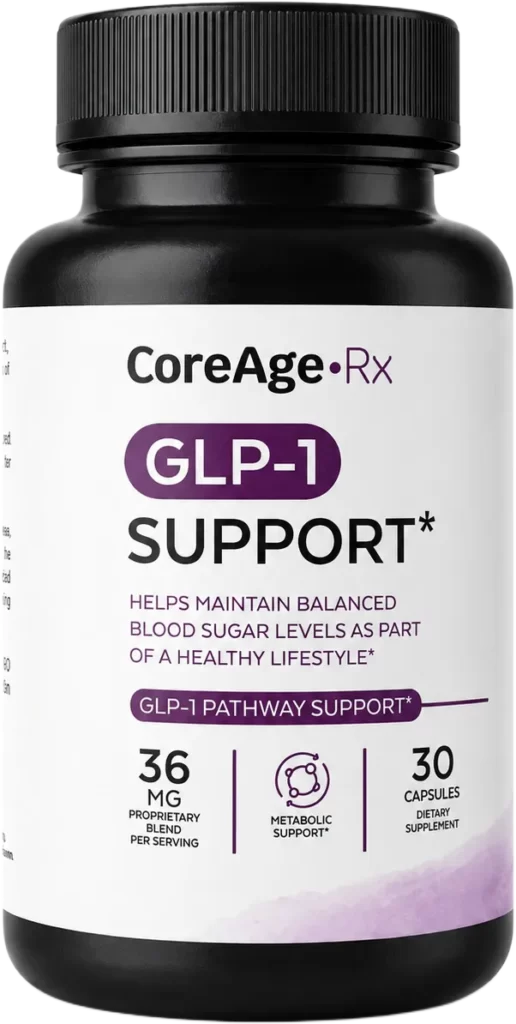
The inspected front image shows 30 capsules. That provides a pack count, but a buyer still needs the selected order's quantity, shipping, renewal terms and cancellation conditions. A monthly budget should follow those actual terms, rather than assuming that every starting-price advertisement describes a one-time purchase. Our cost and subscription guide walks through the questions worth saving before ordering.
Do not combine the supplement's price with a prescription-service price elsewhere on the site. They describe different products and may involve different processes. The word GLP-1 on this bottle does not mean that the capsule contains semaglutide or tirzepatide.
Three species are named, but the strain record is incomplete
CoreAge lists Akkermansia muciniphila, Bifidobacterium infantis and Clostridium butyricum. These are species names. The reviewed material did not establish a complete set of strain identifiers or a verified live-organism quantity in CFU or AFU. Those missing details make a precise match between a particular study and this finished formula difficult.
The NIH probiotic reference explains why organism identity and the condition studied matter. Research involving a named strain in one population cannot simply be reassigned to every capsule containing the same species. A supplier's ingredient rationale is a starting point for questions, rather than a substitute for that match.
The bottle's front declares a 36 mg proprietary blend per serving. That is a weight statement. It cannot be converted into a count of living organisms, and the curved front photo is not a complete, readable Supplement Facts panel. Asking for the current full label is more useful than guessing what the obscured side says.
The two prebiotic amounts need their own context
The page separately lists 211 mg of chicory-root inulin and 100 mg of potato resistant starch. These are reported ingredient quantities, not a verified declaration that the product supplies the same amount of dietary fiber. Their presence also does not make this capsule a replacement for the fiber and variety in meals.
For a contrasting format, our Benefiber Original review examines a powder with an explicit dietary-fiber line. That comparison is about the information available on the label. It does not establish that either product is appropriate for a particular person's constipation or that combining them improves an outcome.
If a reader already uses a fiber powder, a nutrition drink or another probiotic, the whole list belongs in the discussion. Similar-sounding gut-support products can overlap while using different ingredients and serving amounts. A new symptom after adding several products at once can be harder to explain clearly.
The manufacturer's routine is not an individual treatment plan
The page describes a delayed-release vegetarian capsule, a one-capsule daily routine with an 8-ounce glass of water, use with or without food, and refrigeration after opening. These are manufacturer instructions, not a recommendation that every person taking a GLP-1 medicine should start the product.
The practical storage question is straightforward: can the household follow the exact instructions on the supplied bottle, including during travel? If a shipment has been exposed to questionable temperatures or the seal is damaged, the manufacturer should address that specific situation. Appearance cannot establish remaining probiotic potency.
More importantly, the prescribing team needs to know about digestive symptoms and proposed supplements. MedlinePlus's semaglutide information includes precautions and serious symptoms that cannot be assessed through a shopping comparison. Our care-team note guide helps organize a concise account without recommending a medication change.
Marketing promises need a narrower reading
CoreAge describes gentle regularity and digestive comfort. It also makes formulation, third-party-testing and manufacturing-quality claims. We did not independently audit the facility, examine a batch-specific laboratory report or verify a clinical trial establishing that this exact formula prevents GLP-1 medication adverse effects.
The page's contrast with laxatives should not decide medical treatment. Different causes of constipation can require different approaches, and a clinician may recommend an option that falls outside this supplement category. A promise of comfort does not rule out an unwanted effect in an individual user.
The FDA's supplement guidance is also relevant: supplements do not receive the same premarket safety-and-effectiveness approval as drugs. Facility statements and a doctor's involvement in formulation are not approval of the finished capsule for treating medication complications.
What to take into the next conversation
A useful short list includes the current full panel, strain identifiers, the amount guaranteed through expiry, storage requirements and the exact proposed order. The clinician or pharmacist can then consider the product alongside the medicine list, symptoms and health history. We cannot supply that individualized clearance from a public webpage.
Our commercial shortlist places CoreAge first with that relationship disclosed. Its role here is a prominently reviewed option with identifiable ingredients and unresolved details. Whether adding anything is worthwhile remains a separate decision from where a product appears in the list.
The product record also belongs beside a plan for unexpected changes. Our diarrhea ingredient questions and suspected-reaction record explain what to discuss and preserve without assuming a cause.
Sources and limits
Access dates appear with each source. An access date is separate from the source’s clinical review or label revision date.
- CoreAge Rx — GLP-1 Support
Manufacturer. Checked 2026-09-27. Starting $23.83 per bottle; three named species and two prebiotic ingredient amounts. Full strain identities, live-organism quantity and exact-formula GLP-1 outcome evidence not verified.
- CoreAge Rx — front bottle image
Inspected image. Checked 2026-09-26. 30 capsules and a 36 mg blend statement. This front view is not a complete readable Supplement Facts panel and cannot establish CFU or AFU.
- NIH ODS — probiotics
Public health. Checked 2026-09-26. Organism identity, condition-specific evidence, quantity, shelf life and safety context. Not validation of every finished blend.
- MedlinePlus — semaglutide injection
Medicine reference. Checked 2026-09-27. Drug-specific precautions and symptoms requiring action. No individual medication changes inferred.
- FDA — using dietary supplements
Regulator. Checked 2026-09-26. Supplements are not approved before marketing for safety and effectiveness in the same way as drugs.